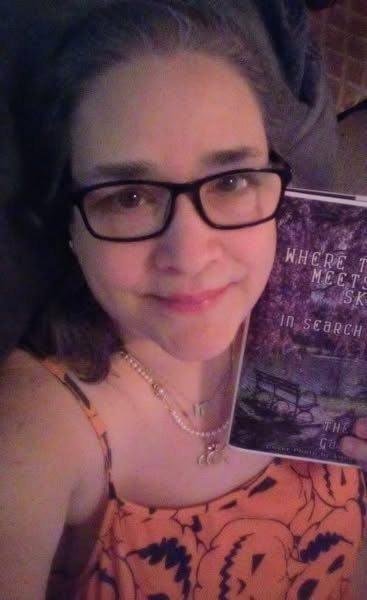
What draws you to horror literature? Does it speak to you psychologically? Do you find poetry the most flexible medium for its expression?
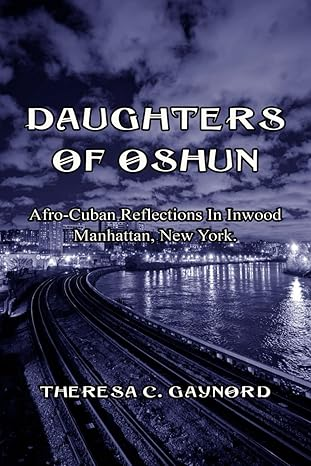
There’s a catharsis as well as an emotional release to not only writing horror literature but to reading it. It becomes a kind of safe space to experience primal instinct and fear without genuine physical danger. The true danger comes when you explore the darkness found in someone else and in yourself. You are left with no option but to confront it and that’s where it can work its magic on you psychologically. You start to see and to realize the different aspects of yourself, your personality and how far you can go with all of it. It’s quite the learning experience especially when you push the envelope a bit and you examine that fantasy can sometimes turn to reality very quickly and it is very much rooted in reality. Humanity’s dark side varies as far as levels of danger but it definitely is rooted in the shadow self, a term Carl Jung used relating to the unconscious, the repressed aspects of one’s personality. It encompasses traits that many people would prefer to deny or hide and here is the writer exposing it all out in the open. It’s interesting and a learning experience at the same time. I love poetry because it allows me to add beauty to the darkness as well as illuminating it. I love poetry because it resonates with beauty and deep meaning-truth.
Do writers have moral obligations to their work or to their society? Some would say the artist owes the work their ultimate truth. How do you view authenticity in art?
Well, that’s a complex and multifaceted question. I think it depends on what platform the writer is working from. Surely if you are a journalist you must uphold integrity and maintain it because of public trust and the dangers of not doing that. Reporting accuracy is ethical and there is no place for bias or distortion. I believe creative artists aren’t necessarily bound to that because we write our own truth from our own perspective and experiences. And we can play with that within a story and have various truths and perspectives as well as experiences present in one sitting. Truth can be relative, of course. But our primary responsibility is with our creative expression. The fact that it may resonate with others, with our readers, change or have them reevaluate their perspective on things is a plus. It’s the icing on the cake. Ultimately the extent of a writer’s moral obligation is subjective and open to interpretation and I personally love that. That’s authenticity in art.
Truth is a shady ground. How do you personally come to self-realization that inspires your momentum to create?
As I said before, truth is relative and depends on individual perspective, cultures, context etc. Of course there is that and then there is absolute truth, which exists independently from any particular viewpoint. I like to play with both. With absolute truth and relative truth. The independent and dependent factors, objectivity vs subjectivity, adding in some science, ethics, personal beliefs, and philosophy-gotta have philosophy, that all inspires me to create and set the pace for anything I am writing. And you will find quite a bit of that in all of my work.
TZPress recently published your spiritual poetry collection, Where the Road Meets the Sky. Can you tell us why you wanted to engage in spiritual poetry?
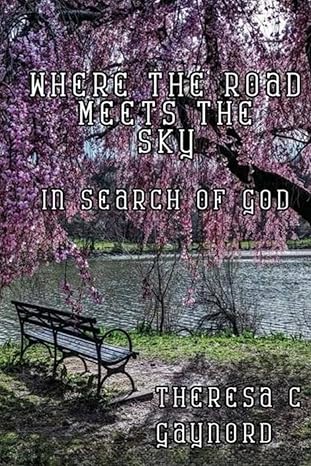
Well, I’m a very spiritual person. It’s in everything I write and has become sort of an identifiable blueprint for all of my books. I’m of Spaniard-Cuban heritage. And while I was raised Roman Catholic, there was always a kind of syncretism between Yoruba beliefs and Catholicism. A blending of traditions if you will. And that spiritualism is found in all of my books because it is deeply rooted in my soul. It’s who I am and what I embrace. It’s what keeps me going and what defines me based on my culture.
The book is dedicated in its entirety to Jesus Christ. It shows your journey through many spiritual traditions. Other than Christianity, what world faiths engaged you the most and taught you about truth?
Aside from the Yoruba form of spirituality which I already spoke of, I have gone through the exploration of practically all religious and spiritual faiths and I have found value in all of them. Wicca, Witchcraft, are still spiritual paths I embrace. Hinduism, Judaism, Buddhism, Santeria, Voodoo, Hoodoo, Taoism are all a huge part of me because I’ve studied them and incorporated them into my very being. And you will find them or at least a reference to them in all of my work. I have kept myself open to all this in my spiritual journey because I believe all roads lead to God. Religion and spiritual paths are rooted in culture and there’s a perfect truth and beauty in most of them. Having said that, I will have to say that for me personally, The Holy Roman Catholic Religion and Jesus Christ, Mary, all the angels and saints, are what resides the most in my heart. That’s my true religion. I was born a Roman Catholic and I will die a Roman Catholic.
Finally, how does your creative spark emerge? Do you write regularly or is there some ritual you follow?
I always have ideas, thoughts swarming around in my head and the best way to compartmentalize them is to write. Most of the time I don’t follow any specific kind of structure I just sit down at the computer and bleed- as my favorite author Hemingway would say. The final product always surprises me because it brings out things I never thought I actually felt before or that I gave much credence to. It’s an awakening and a self learning self help experience that is very rewarding as well as challenging. Thank you so much for this Interview. Much Love and Many Blessings to all.

