The evening in Kalyani was thick with the scent of rain-damp pavement and the low, hum of a city that ran on numbers—birth dates, bank balances, and bloodlines. But inside Cafe 365 Days, Zara Parvin lived in the spaces between those lines. She lived in the “resonance.”
The cafe was small, a cosy pocket in Block A where yellow lamps cast long, amber shadows. In the far corner, a young couple was lost in a “lovey-dovey” haze, sharing a slice of cake, laughing between half-finished sentences, their fingers brushing without hesitation. They leaned into each other, their laughter easy and rhythmic. Their love was a simple equation that already had its answer; they fit the mould society had carved for them.
Then, there was the other table.
Zara sat like a drifting cloud , present yet uncontained. Across from her, Ahaan Jain carried a quiet gravity. He didn’t just sit, he seemed to anchor the space like Saturn. He was a man of gravity and rings, his masculine frame a fortress of guarded silence. He was the “coconut”, hard-shelled and weather-beaten by the expectations of a lineage that demanded he be practical. It was his past, and the voices of his mother and sisters, that spoke for him now.
Ahaan glanced at her, then away, his fingers tapping the table once before stilling. “We aren’t compatible, Zara,” Ahaan said. The words were a barricade. “I can be a friend. But that’s the ceiling.”
He didn’t tell her about the invisible ghosts sitting in the empty chairs between them. He didn’t mention the conversations where his family had weighed her name against their reputation and found her “lacking in compromise.” Those quiet verdicts had followed him, until their fear began to speak in his own voice.
For months, they had existed in the “almost”, notquitelove, neverquiteabsence. They shared secrets he didn’t dare tell his “compatible” friends. They shared a psychological resonance that made the air hum. Zara stayed because she couldn’t accept losing a game she hadn’t been allowed to play. She was waiting for him to simply step onto the field.
Zara glanced at the happy couple in the corner, then back at Ahaan. She could see a quiet, consuming tragedy in his stillness—the kind that feels deeply, yet never dares to speak. She could see the way he dreamt of her while his tongue treated her like a commodity, a “platter” easily available but never to be honoured.
”Look at them,” Zara whispered, her voice steady despite the ache. “They think they’re in love because they fit the script. But what we have… doesn’t need permission to exist. How can you say a bridge won’t hold if you’re too afraid to even walk across it? You aren’t choosing logic, Ahaan. You’re choosing safety over reality.”
Ahaan didn’t move. His jaw tightened slightly, as if something unspoken pressed against his silence, then just as quietly, he let it pass. He stayed on his side of the line, intimidated by the sheer weight of a potential he wasn’t brave enough to open.
At some point, without either of them noticing when, they ordered food. A plate of sandwiches sat between them, edges growing cold as they spoke. Zara’s green tea rested untouched for a while before she lifted it, the warmth fading faster than expected. Ahaan’s coffee, once steaming, settled into a quiet bitterness. They continued talking, but not towards anything. No resolution, no confrontation, just words filling the space so the silence wouldn’t have to. And as the cups emptied and the plate cleared, the conversation, too, seemed to reach its end, not with closure, but with a quiet exhaustion.
On their way back, the city felt unusually quiet. Zara paused by a roadside puddle, watching the blurred reflection of streetlights ripple and break. For a moment, she thought of how clearly some things exist until touched by doubt. Then she stepped forward. Ahaan had already walked ahead, absorbed in a phone call. Noticing the distance, she moved to match his pace. In that quiet adjustment, something within her shifted. The image beneath her feet dissolved, and she kept walking.
In the days that followed, nothing changed, and that itself became the answer. There was no message, no reconsideration, only the same silence repeated until it lost its ambiguity. Slowly, almost imperceptibly, Zara stopped waiting for something that had already chosen not to happen.
What happened to Ahaan, nobody really knew. From a distance, he seemed to be doing well. His life moved with a certain precision, mornings beginning with the sharp buzz of alarms, the faint bitterness of over-brewed coffee lingering on his tongue, the rustle of neatly pressed shirts chosen without thought. Days blurred into meetings and measured conversations, where his voice remained steady and his expressions carefully contained.
Evenings carried a different silence. The low hum of traffic outside, the dim glow of a phone screen lighting up his face, messages replied to with just enough words to pass as present. Sometimes, there were gatherings and laughter that came a second too late, glasses clinking, the burn of alcohol settling warmly in his chest. He stayed just long enough to belong, never enough to be seen.
And in the quieter moments, when the noise receded, there was something unnameable that lingered. In the pause before sleep, in the half-finished thoughts he never followed through, in the way certain memories surfaced without warning only to be pushed back down. He filled his life with work, routines, and family, each layer carefully placed, until there was no room left for what he had once almost allowed himself to feel.
He had not forgotten. He had only learned how not to reach for it.
A few months later, they met again by chance. This time, he was not alone. There was a girl beside him, someone who seemed to fit effortlessly into the world he had chosen. Their conversation remained on the surface. There was no resonance, no unfinished sentences, only polite words where something deeper had once existed. And in that unfamiliar normalcy, Zara understood that what they had did not disappear. It was simply something he had chosen not to carry.
Years later, when people asked why she was still single, Zara would only smile. She wasn’t in a rush to trade soul-deep resonance for a numerical match. She was choosing not to shrink something profound into something acceptable. She knew that leaving wasn’t a single day on a calendar; it was a slow, quiet process of honouring her own value. She hadn’t lost. She was simply the only one brave enough to show up for the game, holding a love that was far too real for a man who only felt safe in the numbers.
###
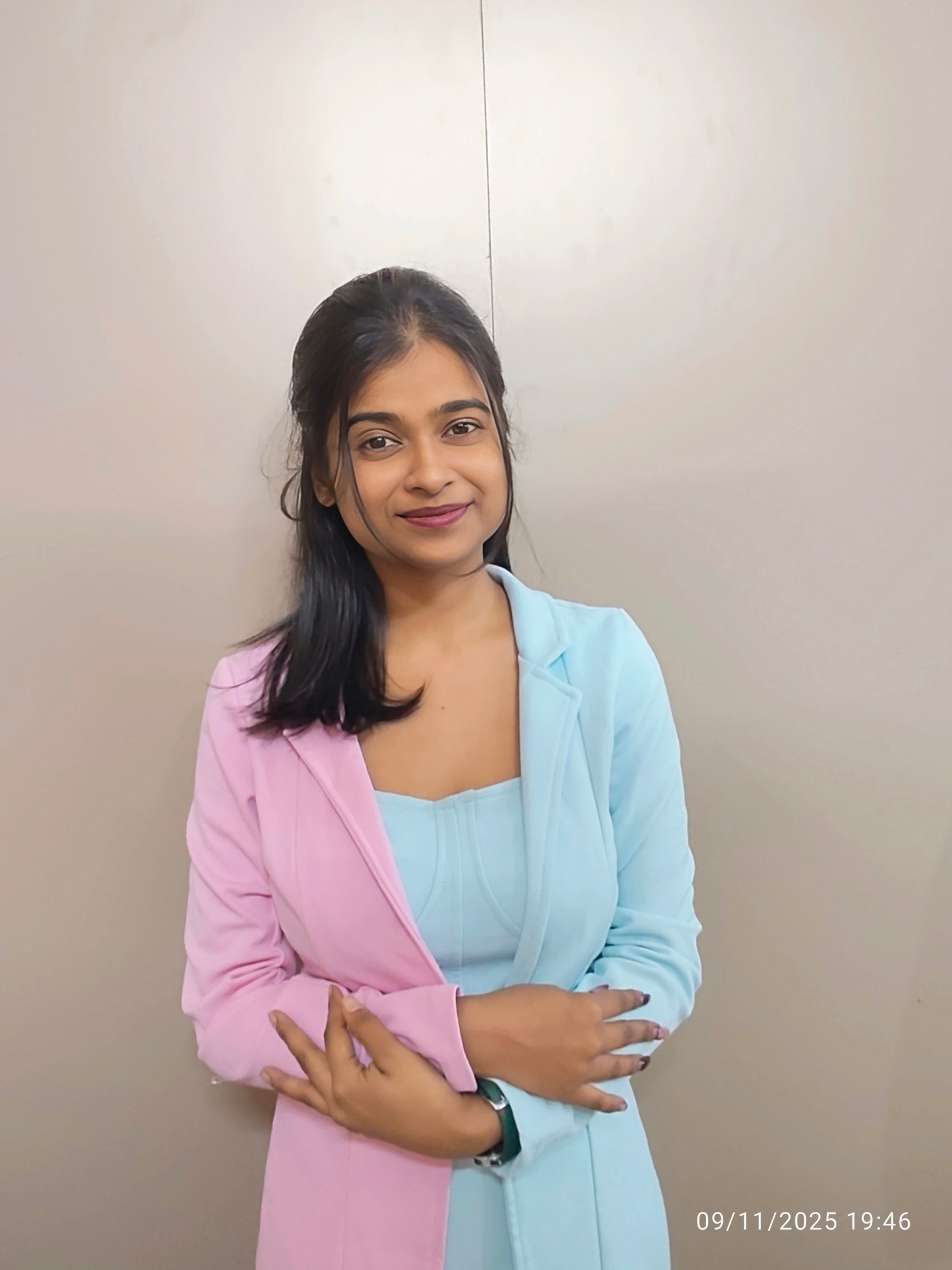
Rishika Marethia is a postgraduate student of English Literature and a trilingual poet who writes under the pen name “Risk.” Her work moves across Hindi, Bengali, and English, exploring the quiet intersections of love, loss, and becoming. With a voice that is both intimate and reflective, she often captures the emotional landscapes that exist between what is felt and what is spoken.
Alongside her academic engagement with literature, Rishika writes stories and poetry that echo lived experience which are unfiltered, searching, and deeply human. Her writing gravitates toward moments of incompleteness, where relationships linger in silences and emotions resist easy resolution.
She currently balances her creative practice with teaching, believing that language is not only a tool for expression but also a space for healing and connection.

