Selected Poems edited by Dustin Pickering
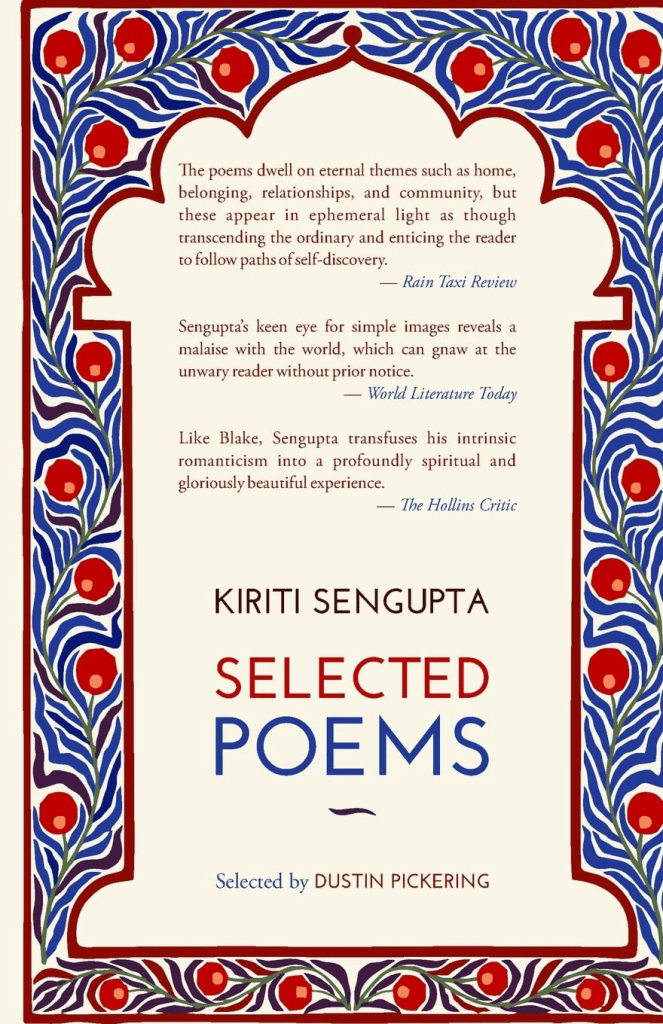
Pages: 228 pages
Category: General Poetry
Price: $18 USD
Description: […] soft and musical, hard and strong, vulnerable and sublime – The Hindu
Sengupta’s poetry is far removed from so-called divine seeking. His poems are more akin to the Upanishads-they observe, they analyze, they probe deeper into the very essence of phenomena, and then, they raise questions that remarkably look out for truths. – The Critical Flame
Sengupta absorbs the subtleties of life with a painter’s eye and words come out in “full throated ease.” The lilting flow of verses pinpoints at the roots, the poet’s affinity with his family gushes out with a hidden sense of loss, and the apparent simplicity of his verses, at times, hints at a profound sense of unease. – Colorado Review
[Sengupta] reminds us that the actions we take – day in, day out – are a small part of a larger paradigm of the natural world. No matter one’s affiliation or background, Sengupta ultimately leaves us the lasting message that we should find meaning in what comes our way and extend those values into the future. – Athena (Moria Online)
Sengupta’s writing is rather distinct and stands alone in the Indian contemporary scene. [His] verse, though exhibiting an array of themes, swims together in one great blue ocean, a humungous, ethereal underbelly which pins everything to the locus of his startling words. We find ourselves in a deep, contemplative experience, one where Sengupta masterfully moves across his subjects with generous ease, all thoughts swaying in a suave lilt. – Cha
Read a review at World Literature Today by Somudranil Sarkar:
“In offering this “new whole,” Sengupta is revealing and poised. With Selected Poems, he signs a truce with journeying destitution. This destitution is, figuratively, his mapped life, which is both personal and political. A poetic career spanning over fourteen years has led to the evolution of his thought process. His cadence and phrases convey themes of ritual, household relationships, dissatisfaction, and harmful obsessions, which do not offer a didactic manifesto but a more renegade spiritual promenade.”
Read a review at The Hindu by Malashri Lal:
“I wish to suggest that mature, sophisticated poetry need not chart a growth, it charts a diversity and expansion of interests. Given Sengupta’s ancestry in Bengal, a fine sensibility propels the language of verse. He is willing to bend genres, experiment with seasonal moods, enter the secret of village homes — his poetic excursions resulting in the aching throb of ‘Let the Flowers Bloom’, ‘Lucency’, ‘The Pillars of Soil’ and others in Selected Poems.”
Read a review at Literary Yard of this Selected Poems volume by Pradeep Trikha:
“Within the increasingly diverse field of contemporary Indian English poetry, Kiriti Sengupta has emerged as a distinctive and vital voice. He cultivates a poetic universe that actively resists both the ornamental, overwrought exoticism historically associated with Indian verse and the excessive formal experimentation characteristic of certain postmodern tendencies. Instead, Sengupta models a poetics of strict restraint, utilising brevity, suggestive imagery, and generative silence to investigate fundamental questions of identity, belonging, mortality, and transcendence.”
Read a review at Cha Journal by Abhik Ganguly:
“The selection traces the career of a polyglot Indian Bengali poet and the quiet arc of sensibility that binds Vedāntic and Tantric spiritual influences, the inheritance of Bengali cultural memory, and the poet’s contemporary socio-political anxieties within the South Asian context. Sengupta’s verse is characterised by sparse language and spiritual resonance.”
Oneness
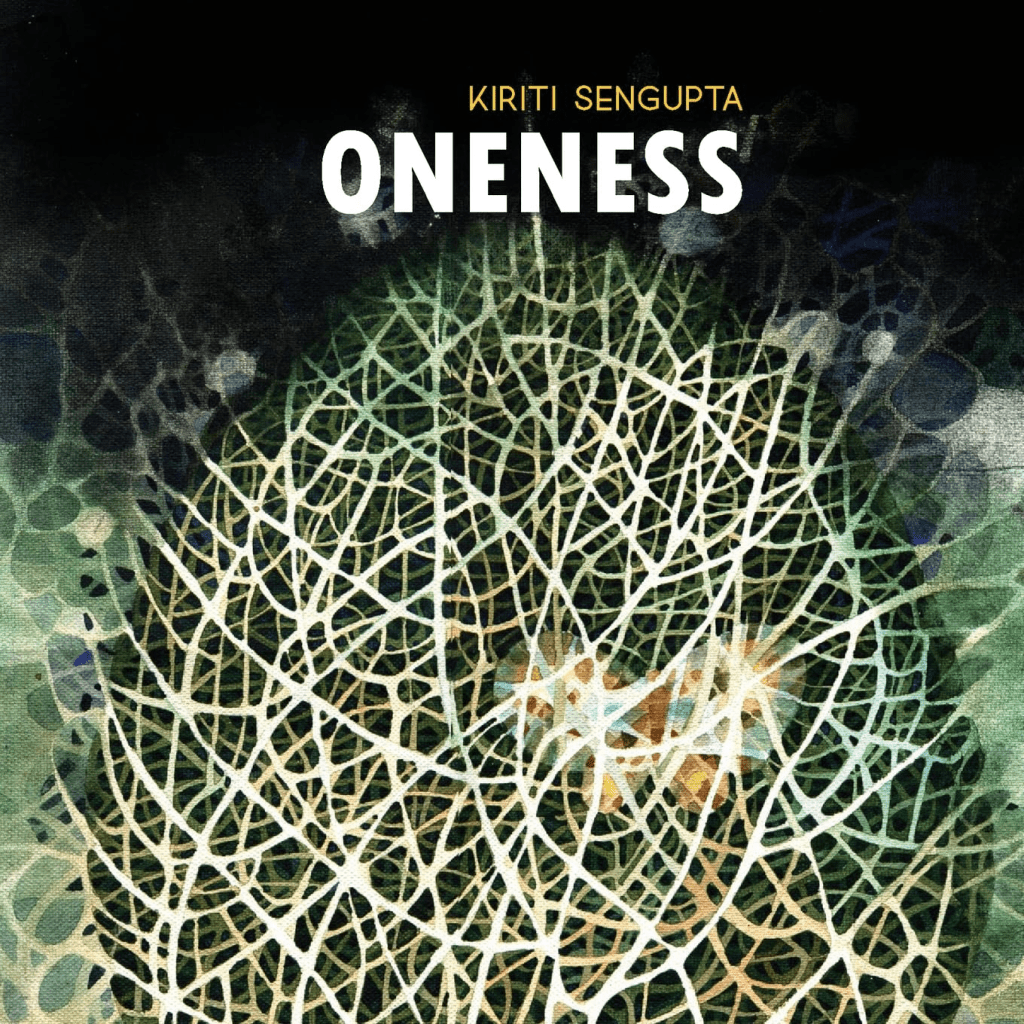
Pages: 54 pages
Category: Poetry/ General
Price: $12.99 USD
Description: Source is the primary region of being. In its primacy, the source is an origin: the oneness. Oneness cannot be divided yet as a realm of being; it divulges itself. In Sengupta’s received exploration of this realm, one may learn that Oneness also feels and exists of itself, returning to itself. Life as becoming is a process of becoming eternal, the Oneness. Each poem is an exploration of the original point of departure and a departure in itself. With his unusual paradoxical incisiveness, Sengupta invites readers on a meditative journey of self and others. Upon careful reading, one will find more invitations into Oneness than answers.
Read a review of Oneness at Moria by Mateo de Leon:
“Within this collection, each poem stands out for its unique ability to invoke deep emotion and profound thought. One stand-out piece is “On Exit,” which explores the ideas of loss and mourning. It navigates through the complexities of grief and reflects on rituals and emotions surrounding the death of a loved one—the ghee that the speaker relishes cooked with his food is the same substance that is smeared on his father’s dead body, before the pyre. Each stanza offers insight into the speaker’s journey through mourning, from questioning the future of grief to the therapeutic release of ashes into the Ganges River. Its universal themes of exit invite readers to reflect on their encounters with mortality and the process of saying goodbye.”
Read a review at The Hindu by Sharmila Ray:
“The haiku poems are visually complete descriptions of moments from Sengupta’s experience and the space he occupies. His space is continuously mobile.” (The full review is available for viewing here at Today’s Author Magazine)
Read a review at The Daily Star by Sutanuka Ghosh Roy:
“His style is more impressionist and natural. Sengupta’s Oneness is a festival of feelings and emotions, which evokes an ambiance of celebration replete with different forms of poetry. The haikus blend well with the short poems and prose poems. Sengupta has mastered the artistic discipline of haiku poems, their minimal nature forces readers to pare down to only the essentials, internalising each word or even syllable count.”
Read a review Coffee and Conversations by Rajorshi Patranabis:


An important interview at Asymptote Journal between publisher and poet:

“Kiriti Sengupta: Poetry enjoys a niche market worldwide, and there is no logic in thinking that poets who write in English will achieve prompt readership across the globe. Reaching out to a bigger audience primarily requires connections. Do you think US poets and readers would readily accommodate an Indian poet just because s/he writes in English? Will the Indian audience quickly acknowledge a poet based in the United States? Or, for that matter, will the world be ready to study a Bengali poet because his poems are available in English? See, being read and reviewed outside one’s native land is a challenging endeavor. International collaboration makes it easier for authors. Imagine how you obtained blurbs for my chapbook Oneness. If you had not published and promoted Oneness, do you think my work would have reached where it stands now? Is the quality of the work the only deciding factor? I’m sure you have the answers.”
Author bio: Kiriti Sengupta splits his time between New Delhi and Santiniketan, the university town founded by Rabindranath Tagore as a hub for learning and the arts. This dual residence grounds his writing in both contemporary Indian life and Bengal’s rich literary legacy. As a translator of Tagore and other Bengali poets, Sengupta maintains a direct connection to that tradition. His collection Healing Waters Floating Lamps won the inaugural Rabindranath Tagore Literary Prize in 2018, and he was honoured with the Nilim Kumar National Honour in 2024. Sengupta’s Selected Poems, published by Transcendent Zero Press (Houston) in 2025, showcases a career spanning fourteen books of poetry and prose he authored. Additionally, he has published two collections of translations and edited nine anthologies. In addition to his writing, Sengupta is actively involved in independent publishing. He serves as the chief editor of Ethos Literary Journal and leads the English division at Hawakal Publishers, where he has nurtured new voices in poetry and prose for over a decade.

